




introduction
¥100,000,000($632,799.20)
残り1点
International shipping available
概要情報
2026年2月4日 ENGLISH⤵︎⤵︎⤵︎
はい、みなさん、こんにちは、井上時田大輔です。
このページはですね、今までそれぞれの作品ページ毎に長々と記していた、或いは長々となってしまうから省いていた作品についての共通の詳細をこちらで記述していこうと思います。
普段絵を描かないでも出来るだけ分かる様に用語や概念等を説明していますが、適当なので、ちゃんと知りたい方は各自調べて下さい…。
BASEの便宜上商品ページを利用していますが、このページでは購入なさらない様、お気をつけ下さいませ…(ご購入された場合は、なにも起こりません)
もっと良い方法があれば分かり次第そちらに移行します。
英語版はGrok君に書いてもらっています。
◉支持体について
支持体という言葉はまあ、それぞれの文脈というか分野によって色々と違いがありますが、絵画における支持体とは、その絵が何に描かれているか、を指しています。
即ちキャンバスであったり紙であったり板とか金属板とか…まあ色々ですね。
それで私の場合は大体「生亜麻布」とか「地塗済キャンバス」とか「市販キャンバス」とか「シナ材」とか記しているワケですが、それぞれが何を意味しているか説明してみます。
まず「キャンバス」について。
キャンバスという言葉はファッションとか絵を描かなくても目にする機会が多い事と思いますが、キャンバスの原義としては帆布(はんぷ)の事で、帆船の帆に使われていた丈夫な亜麻布を指しています。15世紀くらいから西洋ではこれを木枠に張って地塗等を施したものに絵を描いていました。
帆布は亜麻(リネン)が主でしたが木綿(コットン)のものも登場します。絵画でもコットンキャンバスとかありますが、やはり繊維が長く酸性の(麻・ヘンプや黄麻・ジュートと違い)リグニン等含まず丈夫なので亜麻が現在でも主要な素材となっています。
現在の美術用語としては「キャンバス」と言った場合、市販の地塗(合成樹脂ないし膠で目止めし、アクリル等の合成樹脂か乾性油で、鉛白や炭酸カルシウム、酸化チタンを塗布したもの)済キャンバス、またはそれを木枠に張った状態で販売している「張りキャン(張りキャンバス)」を指す事が多いです。
この「市販の地塗済キャンバス」と区別して私は地塗りをや目止めをしていない「生」のキャンバス(リネン)を「生亜麻布」と記しています(まあ一般的な呼称ですね)。
即ち
シナ材に生亜麻布小釘張り(壁掛用穴有)
綾織 ベラルーシ リネン100% 430g/m2
と記してある例では
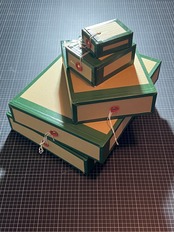
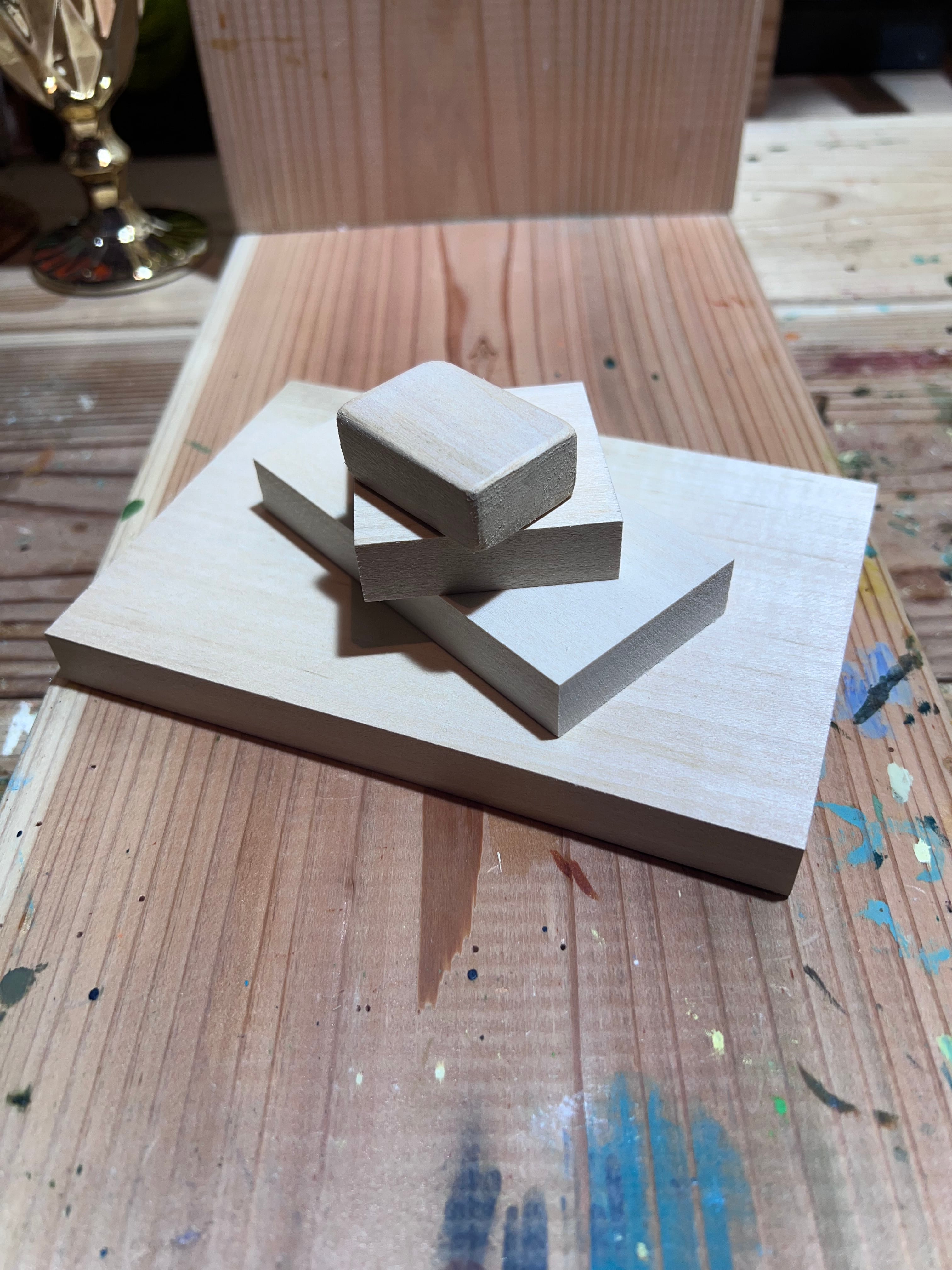
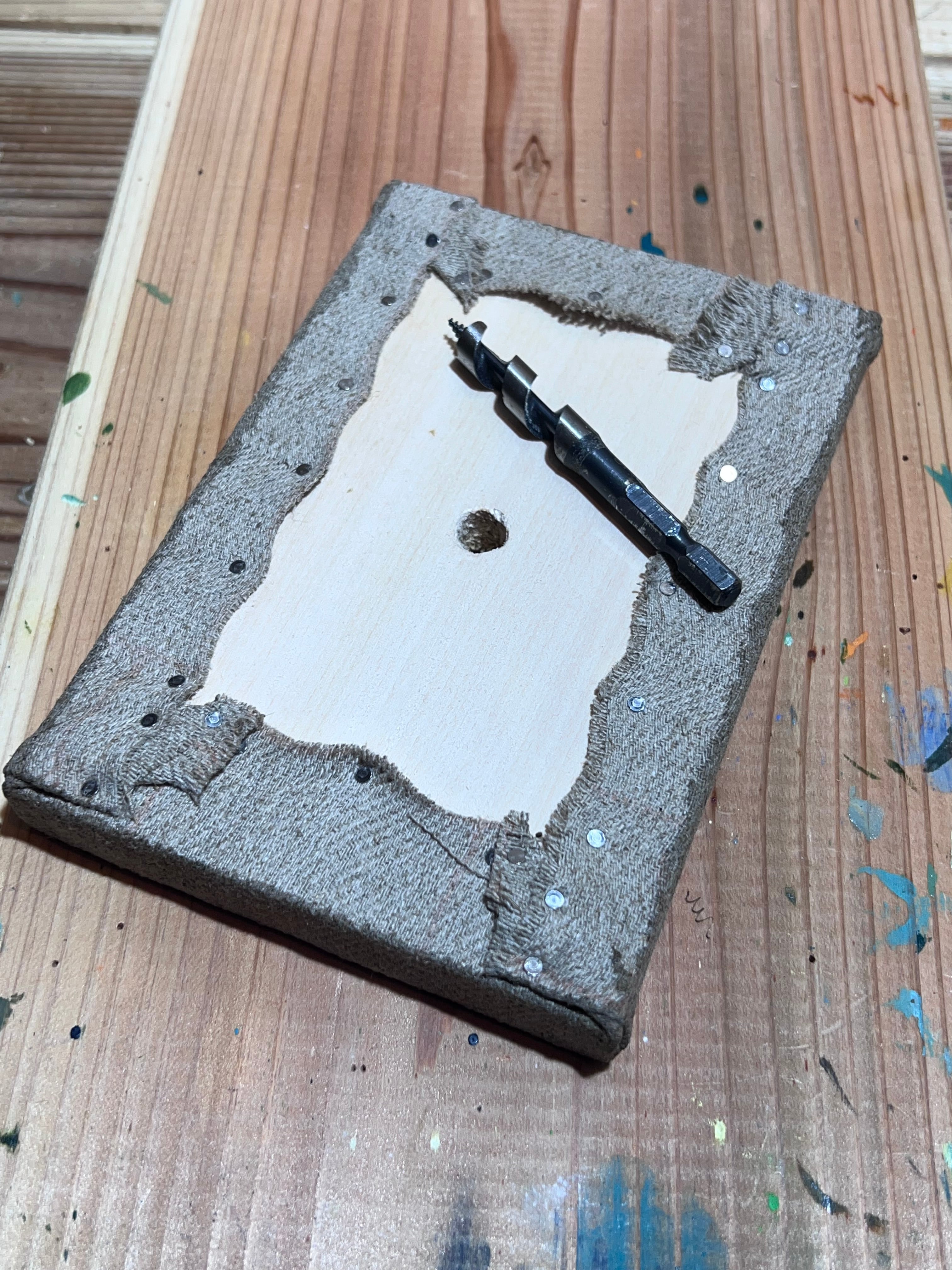
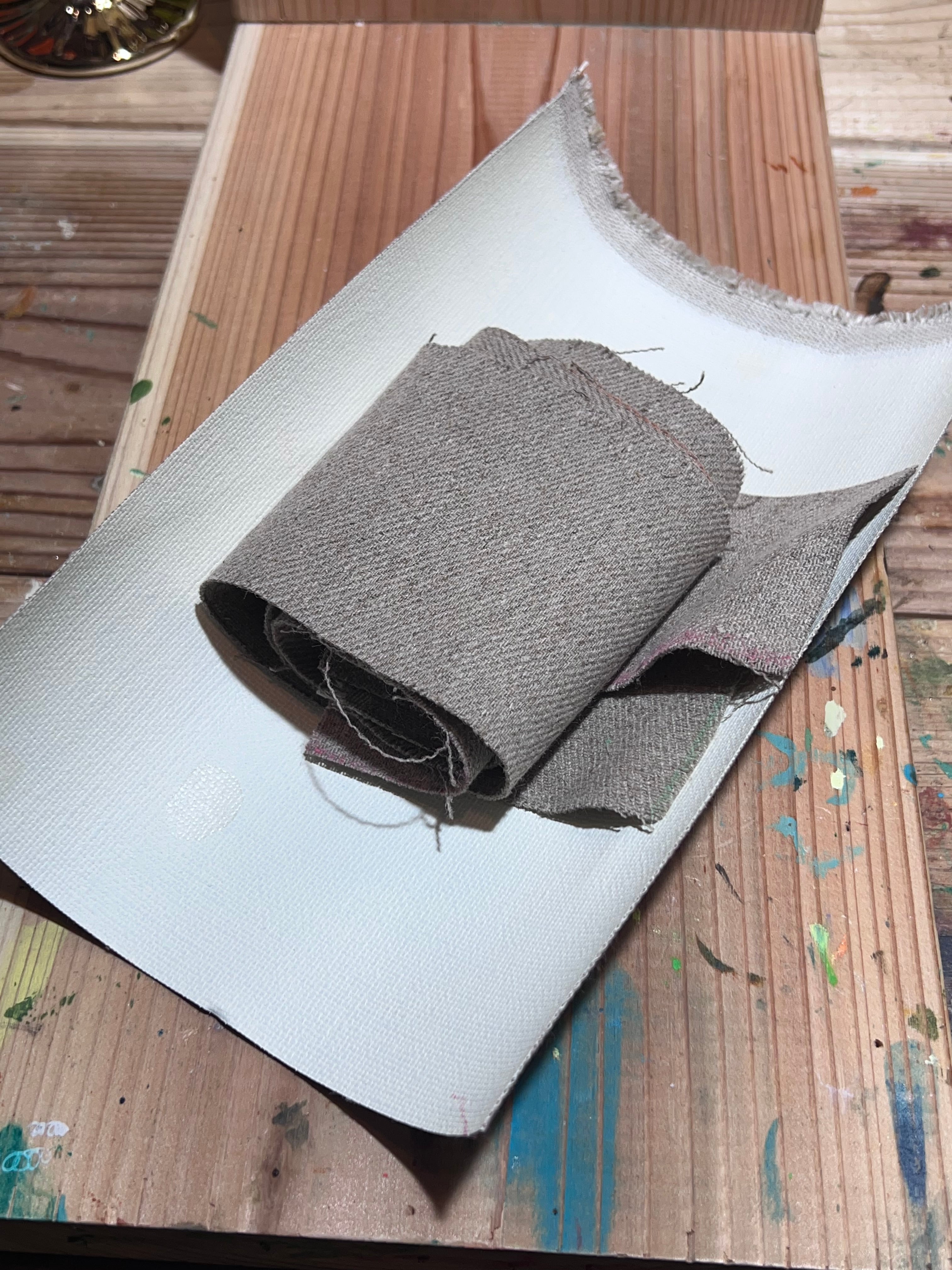
上記画像2番目のシナ(アオイ科シナノキ族シナノキ)の板に壁掛用の穴を開け、ベラルーシ産亜麻100%綾織(経緯(たてよこ)の糸以外に斜めからも糸を通して織った布地、丈夫。430g/m2は、そのまま1平方メートルあたり430gで、私が探した限りでは入手可能なもっとも密度の高い亜麻布)のキャンバスを小釘で張り付けたものを指します。
これに膠(動物の皮等から抽出したタンパク質、ゼラチン)で目止めし、自分で調合した地塗り用塗料で地塗りをします。
小さい作品で木枠ではなく板に穴を開けたものを採用しているのは、小さい木枠を作る手間を省き、より安価で素早く支持体を準備する為です。
シナ材に地塗済キャンバス小釘張り(壁掛用穴有)
と記して例では、そのまま市販の地塗済キャンバスを前述のシナ材に小釘で張ったものを指します。
(私は側面が白いのがあまり好きではないので、大体透明な酸化鉄系の絵具などを塗布しています)
生亜麻布を自分で地塗りしていたのは、少し前までの自作テンペラ(卵などを使用したもの)絵具が市販の地塗済キャンバスと相性が悪かった為であり、完全に油彩に移行した原稿体制では、どちらも採用できます。描画までの準備が早いので今後は市販地塗済キャンバスを採用する事が多くなるかもです。
◉絵具、画用液について。
次に絵具と画用液について。
絵具という日本語は元来は単に絵を描く為の材料(顔料や染料)を指していましたが(岩絵具等)、現代日本では顔料を固着材で練ったものを大体指しています。
顔料とは水や油を含む固着材に溶解しない(染料は溶解する)色の在る物質を粉砕したもので、古くは自然に在るもの、炭や錆、鉱物や動植物から抽出したもを不溶化したもの等、現在では、それらと同じ物質や、より鮮やかで耐久性の高い物質を化学合成したものを粉末にして顔料としています。
固着材(ビヒクル)には色々あり、それぞれ違いがあります。
顔料に水に溶けて水分の蒸発によって固着するアラビアガムと練ったものが「水彩絵具」。
本来水に溶けない合成樹脂を無理やり分散させ、水分が蒸発したら再溶解しないアクリル樹脂で練ったものがアクリル絵具。
最初は液体で酸素と反応して硬化する乾性油(亜麻仁油や芥子油等)で練ったものが油絵具です。
等々
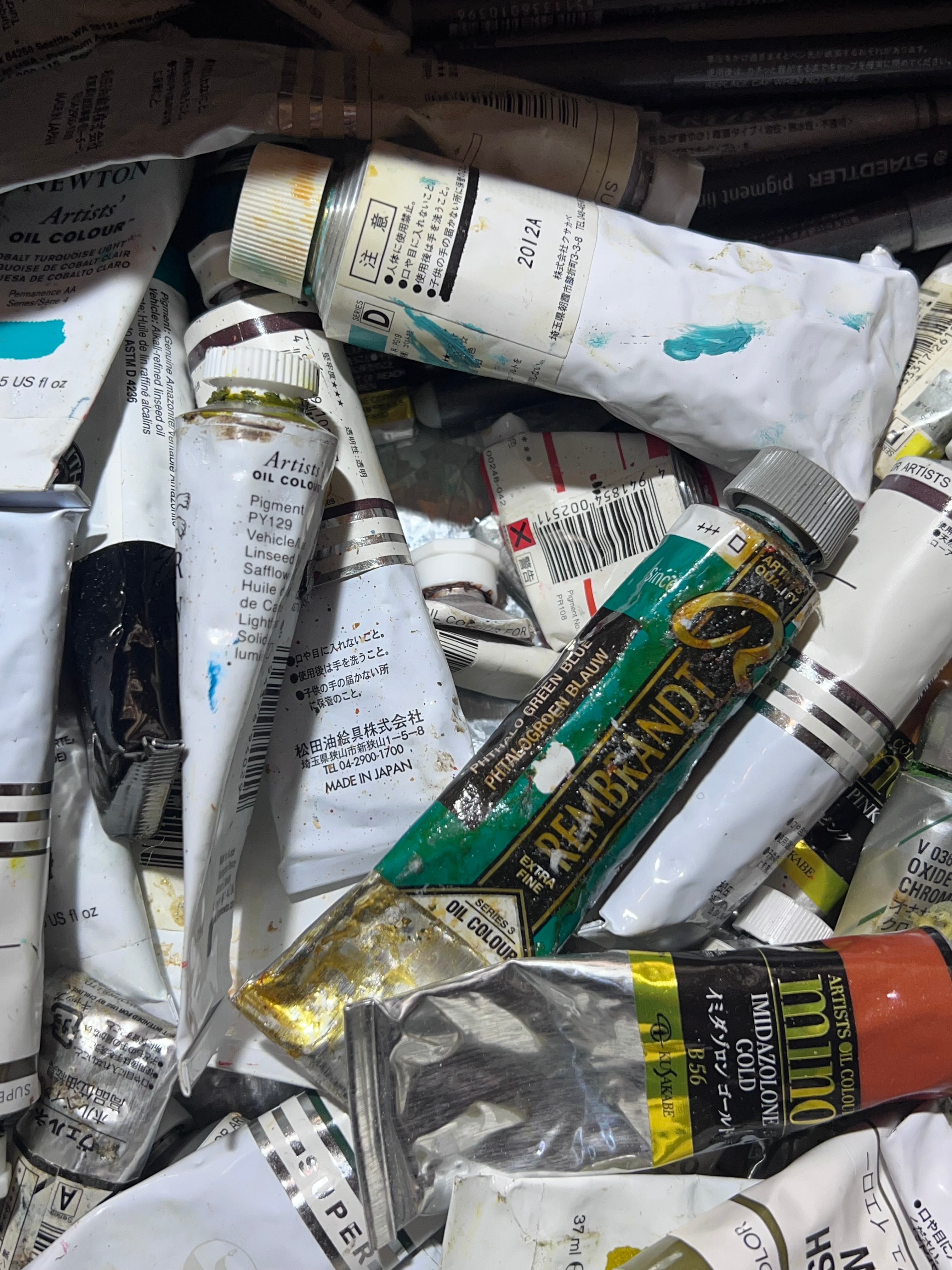
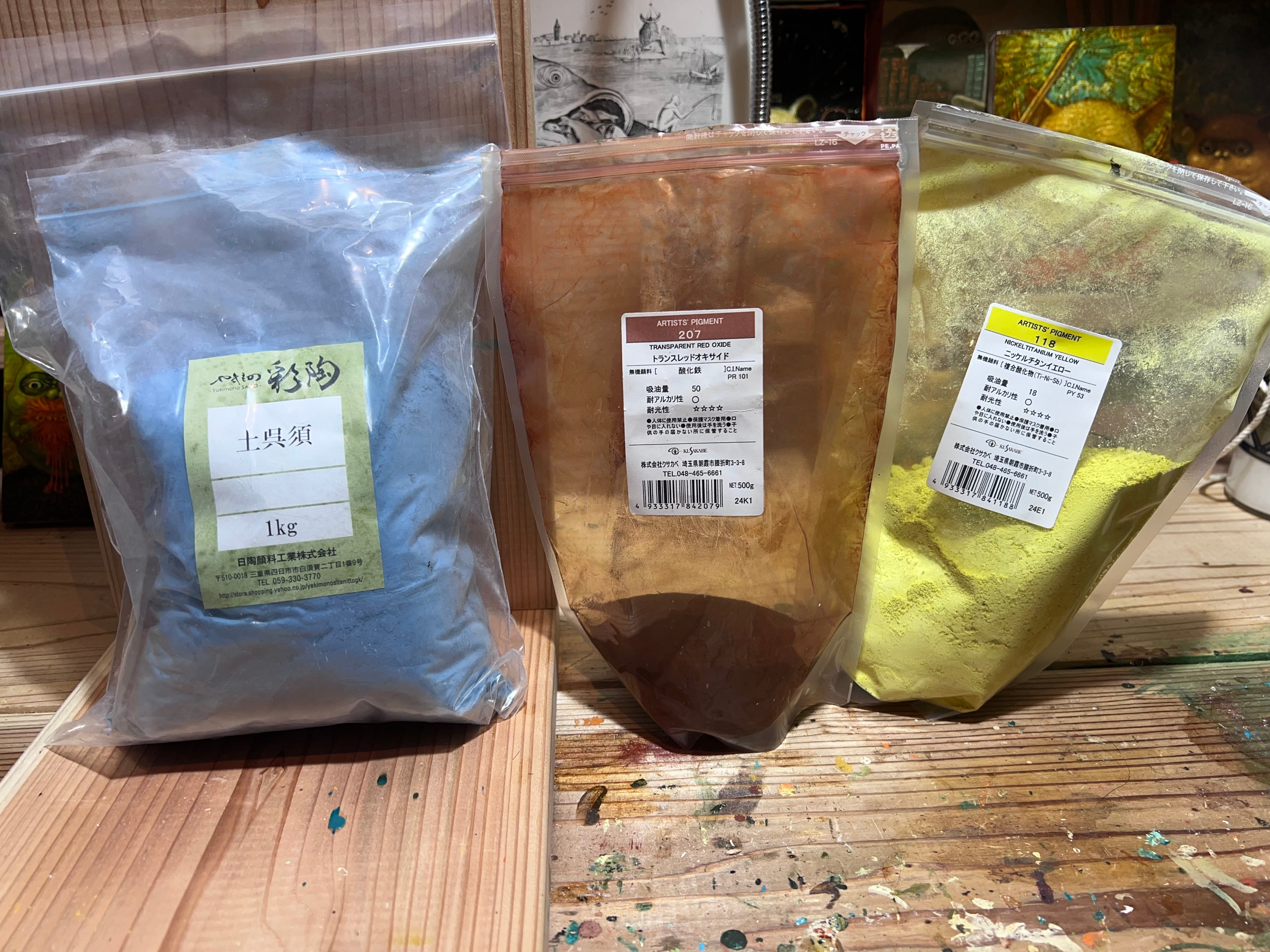
で、私は一昨年くらいから古典材に凝って顔料を自分で合成したり錬金術してたのですが、まあ大凡満足したというか、大変疲れる上に大変描きづらい事が身に染みたので、最近は、その錬金術()の成果の画用液と市販の油絵具をまぜたり、市販の顔料を練ったりして絵を描いております。
画用液とは、油絵具の場合は絵の具に混ぜて伸びを良くして描きやすくしたり、乾燥(酸素との重合)を早めたり、光沢を出したり、或いは消したり、諸々の性質を付与する助剤になります。揮発油(植物精油や石油精油)や乾性油、天然樹脂や合成樹脂、単体だったり混ぜ合わせたもの色々あります。
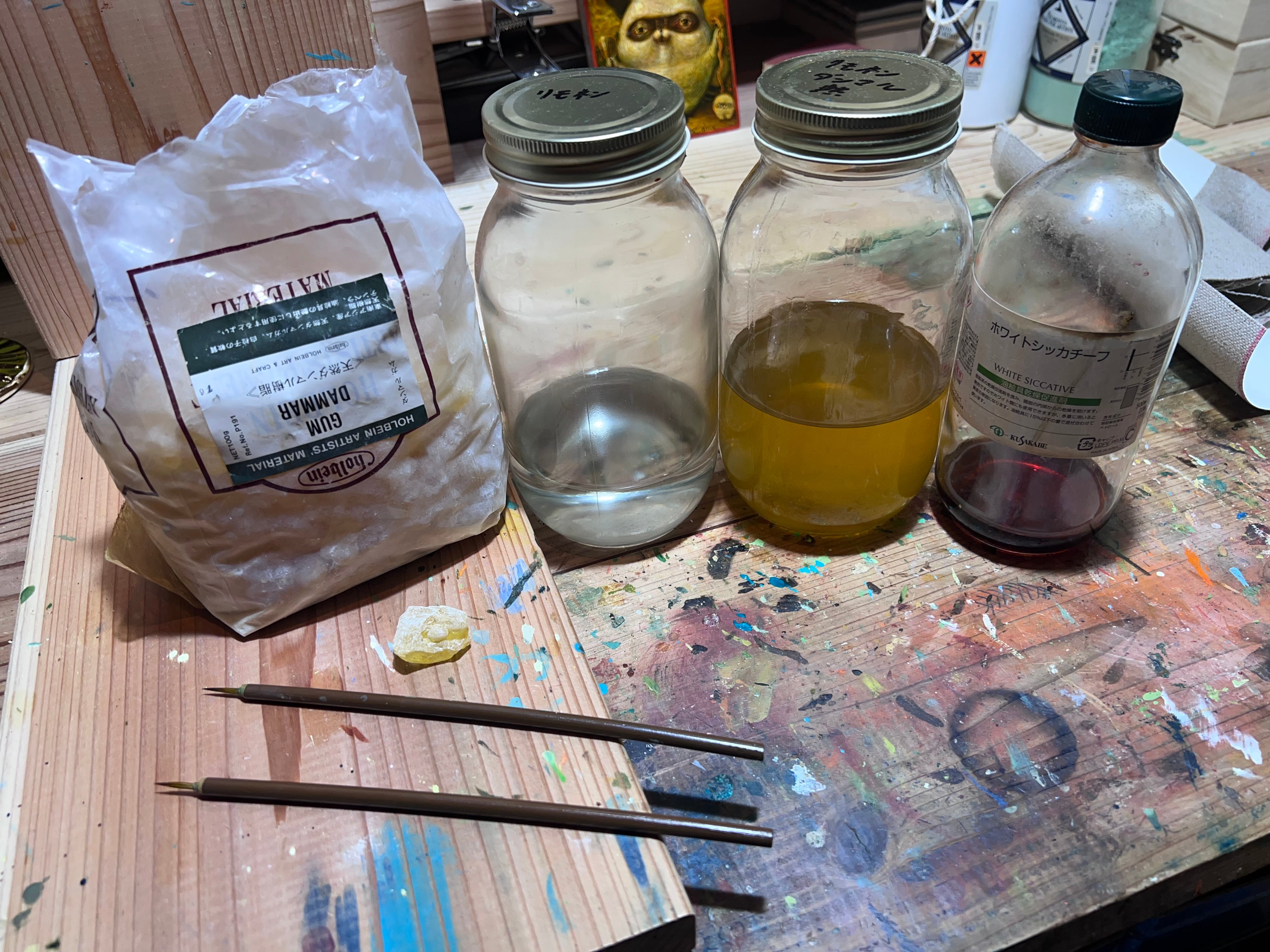
私の場合は※リモネンにダンマル樹脂を加熱して溶かし込んだもの①と亜麻仁油にダンマル樹脂を加熱して溶かし込んだもの②、それに市販のシッカチフ③(金属乾燥剤)を加えたものを混ぜたりして使っています。
ダンマル樹脂は加熱するとより速乾で丈夫になります。
(※リモネン、柑橘類から抽出した溶解力の強い精油。
ダンマル、スマトラ島とかのフタバガキ科の植物から採取される軟質天然樹脂。
シッカチフ、乾性油は鉛やマンガン、亜鉛などの金属元素と反応すると重合が促進され早く硬化する。その性質を利用し、乾性油や揮発油に金属元素を溶かし込んだの。)
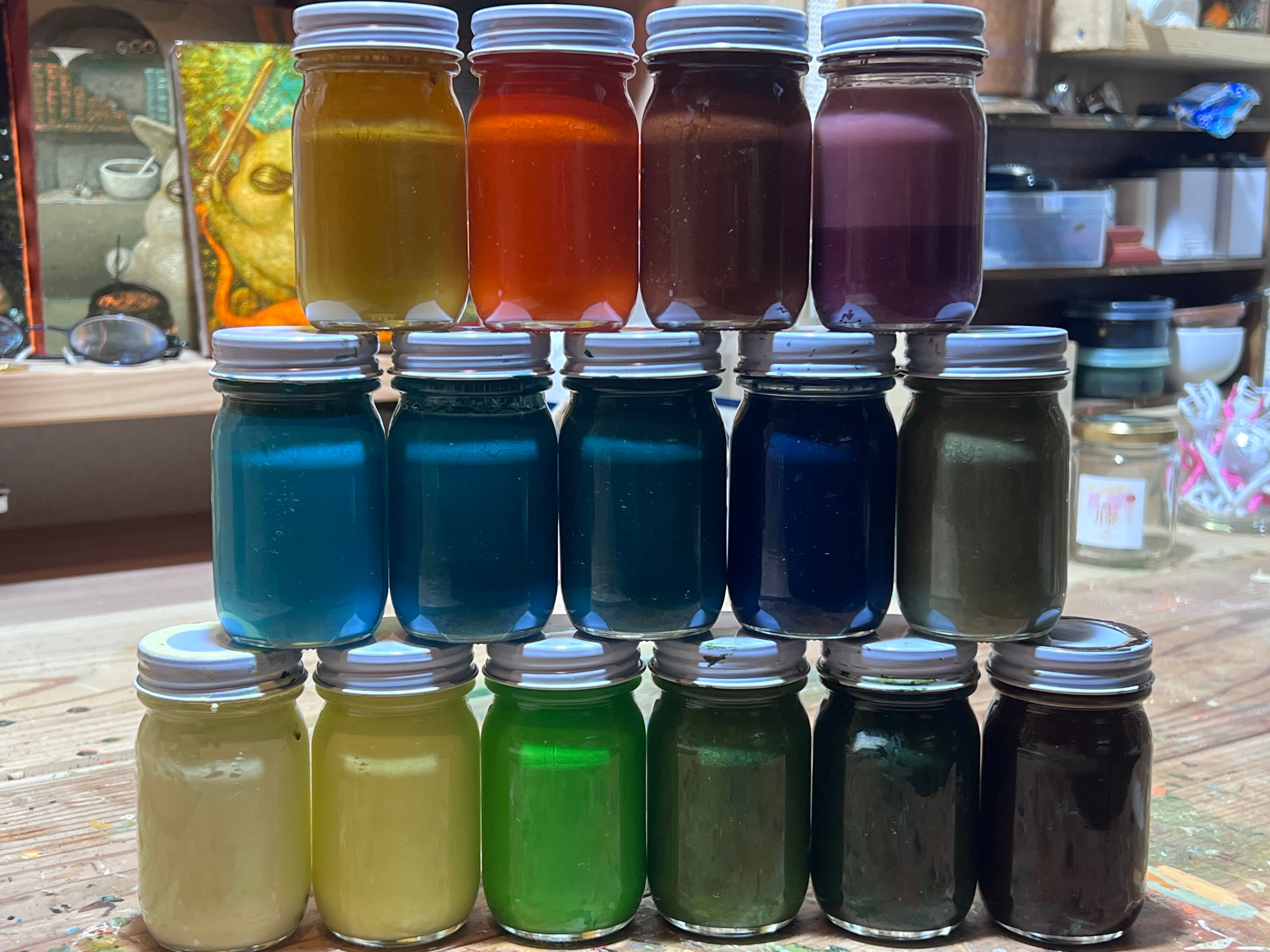
①は乾燥が早く光沢が強い。③を加えて市販の油絵具と混ぜインクにして主に使用しています。
②は乾性油を含んでいるので、単体だと乾燥が遅く、②と③を加えて市販の顔料と混ぜてインクにして主に使用しています。
①②③をすべて混ぜたものも描画の際にインクにまぜて使用します。
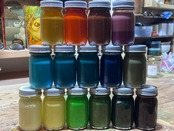
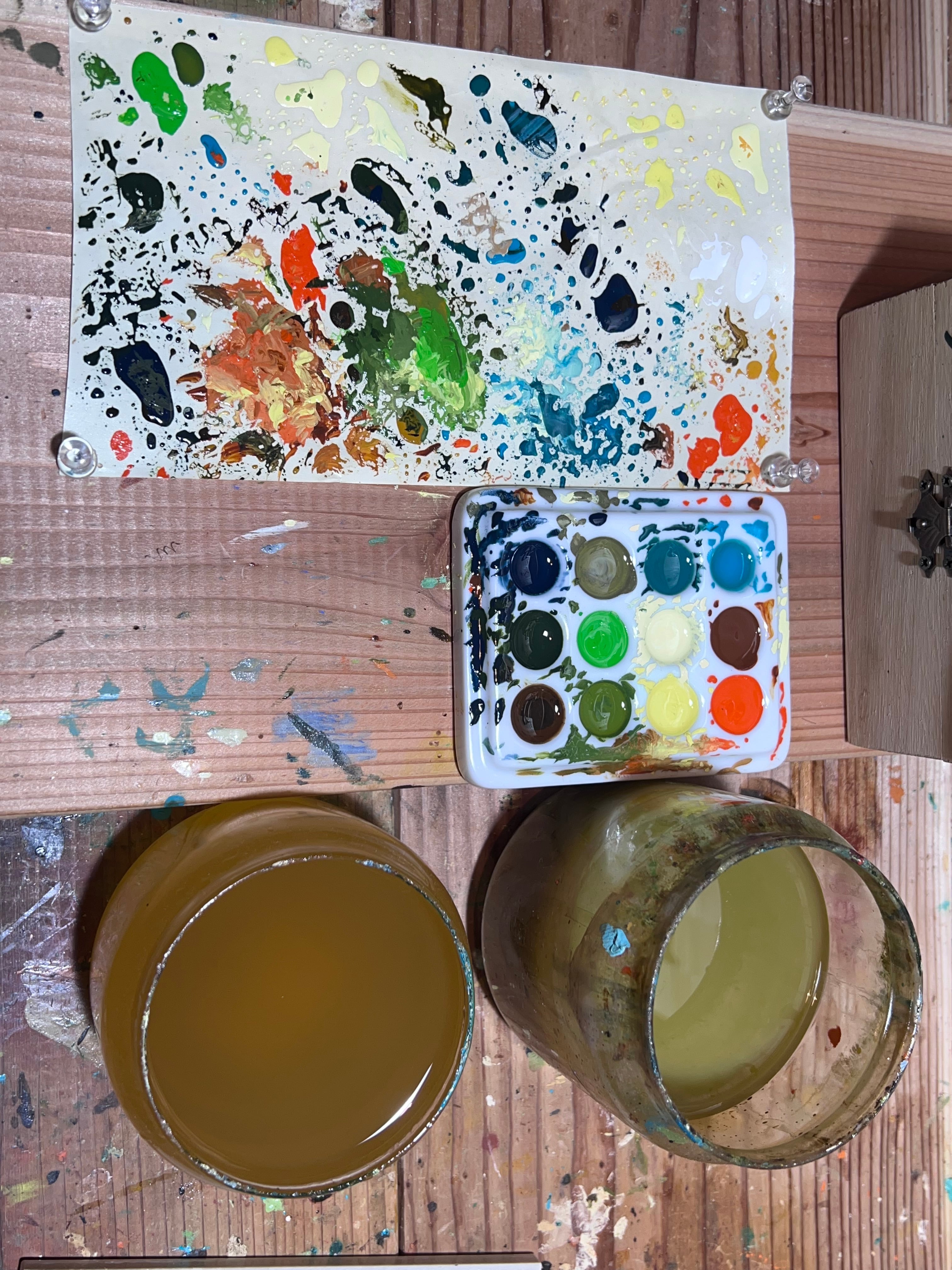
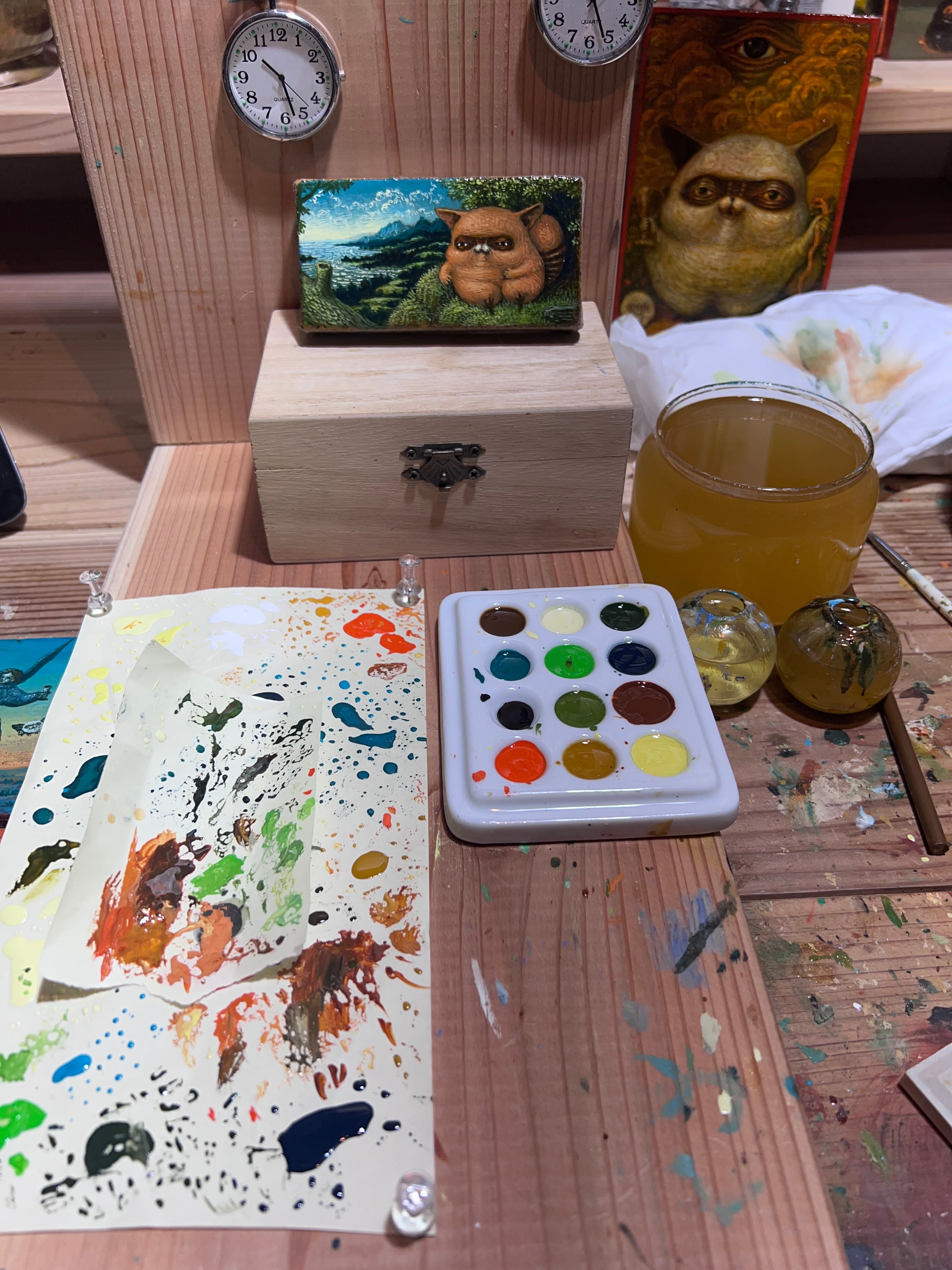
油絵具も顔料も基本的にはインク状にして瓶に詰め、描画時に適宜皿やパレットに出して使用しています。丈夫でエナメルの様な光沢の画面になります。
…さて長々と色々書きましたが、普段文章など碌に書かないので大変疲れて、散漫になってきたのでこの辺でとりあえず終了します…。
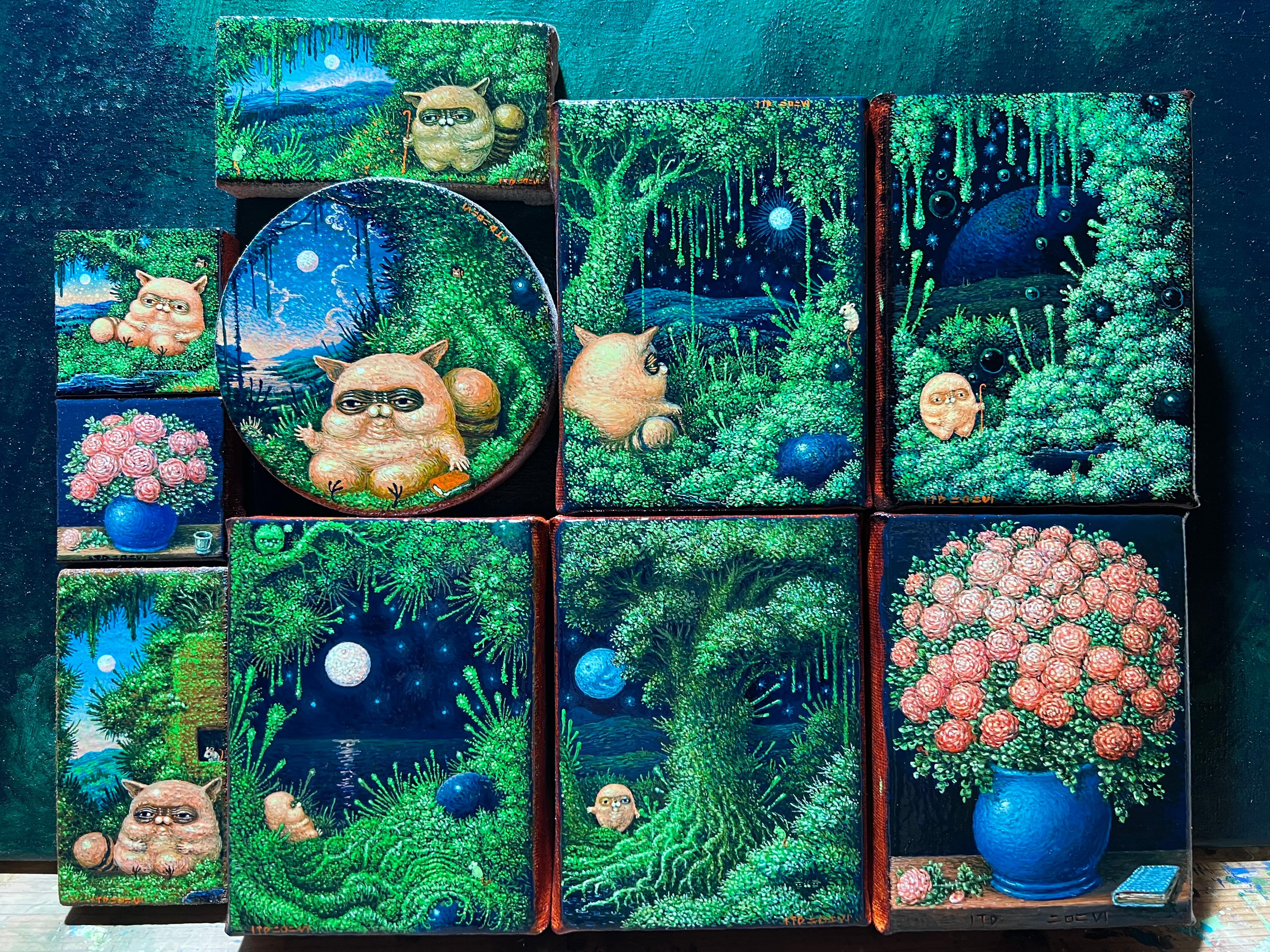
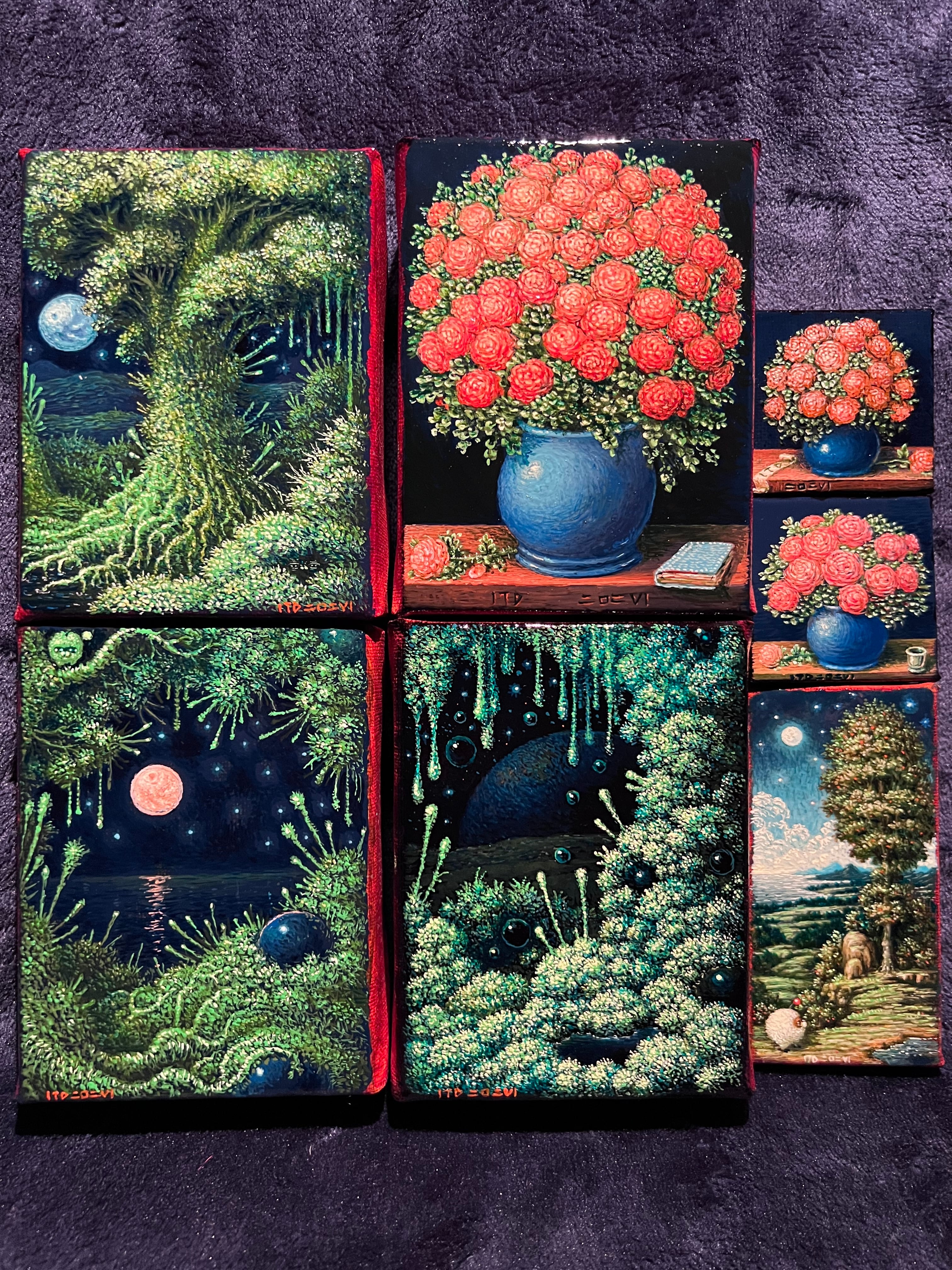
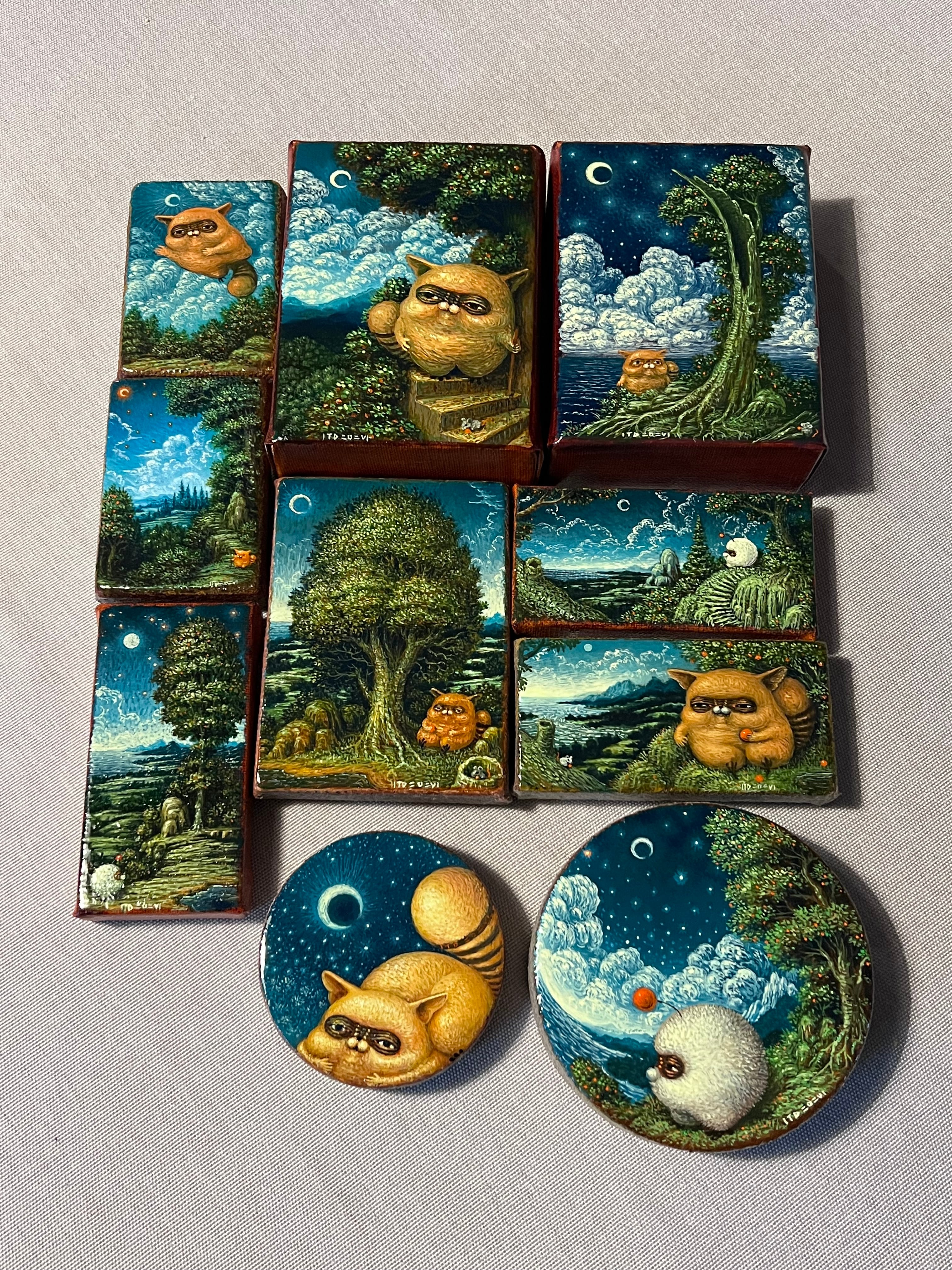
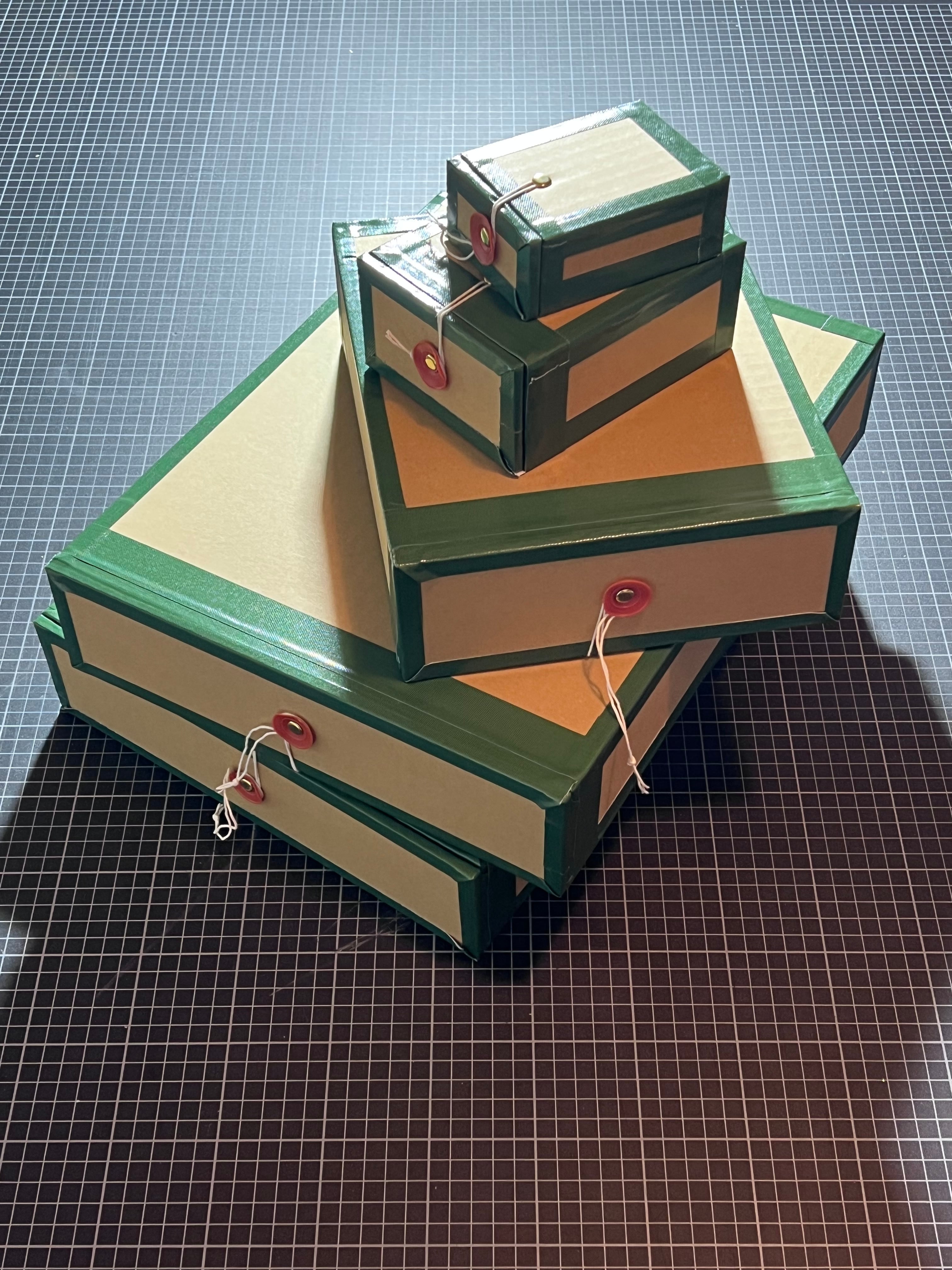
画像を参照しながら何となくどういう風に描いているか理解して頂ければ幸いです…。
気が向いたら何か追記、編集するかもしれません。
Overview Information
February 4, 2026
Hello everyone, this is Daisuke Inoue Tokita.
This page is where I’m gathering all the common, detailed information about my works that I used to write (or sometimes skip because it got way too long) separately on each individual product page.
I’ve tried to explain terms and concepts in a way that’s understandable even if you don’t usually draw, but my explanations are pretty casual—so if you really want to know the proper details, please look them up yourself…
For convenience on BASE, I’m using the product pages, but please do not actually purchase anything from these description pages (nothing will happen even if you do, though).
If I find a better way, I’ll move things over when I can.
(The English version was written with help from Grok.)
◉ About Supports
The term “support” varies depending on the field, but in painting it refers to the surface on which the picture is actually painted—canvas, paper, panel, metal plate, and so on.
In my case, I usually note things like “raw linen,” “primed canvas,” “commercial primed canvas,” or “linden wood panel,” so here’s what each means.
First, about “canvas.”
You’ve probably seen the word “canvas” in fashion or everyday life, but originally it meant sailcloth—strong linen fabric used for ship sails. From around the 15th century, Western painters began stretching it over wooden frames, sizing and priming it, then painting on it.
Traditionally it was mostly linen (flax), but cotton versions appeared too. Even today, linen is preferred in fine art because its long fibers contain little lignin (unlike jute or hemp), making it far more durable and acid-resistant. Cotton canvas exists, but linen remains the main high-quality choice.
In modern art terminology, “canvas” usually means commercially prepared (sized with glue or synthetic resin, then primed with acrylic or oil-based ground using pigments like lead white, calcium carbonate, or titanium white) canvas, or that same material already stretched on a frame (“stretched canvas”).
To distinguish, I call unsized, unprimed linen simply “raw linen” (a fairly standard term).
So when I write something like:
Linden panel with raw linen tacked on (with hanging holes)
Twill weave, 100% Belarusian linen, 430 g/m²
…it means:
A linden (basswood / Tilia) panel with holes drilled for wall hanging, onto which I’ve tacked 100% Belarusian flax twill-weave linen (very strong because the threads run diagonally as well as warp/weft; 430 g/m² is the densest I could find) using small tacks.
I then size it with rabbit-skin glue (or similar animal glue), and apply my own hand-mixed ground.
For smaller works I use panels instead of stretcher bars and drill hanging holes directly—this saves the hassle and cost of making small frames while keeping preparation quick and inexpensive.
When I write:
Linden panel with primed canvas tacked on (with hanging holes)
…it means I’ve simply tacked a piece of commercially primed canvas onto the linden panel in the same way.
(I usually dislike the white sides, so I paint them with a transparent iron oxide or similar.)
I used to prime raw linen myself because my handmade tempera paints didn’t play well with commercial acrylic-primed canvases. Now that I’ve fully switched to oils, both options work fine. Since commercial primed canvases let me start painting faster, I’ll probably use them more often going forward.
◉ About Paints and Painting Mediums
Next, paints and mediums.
In Japanese, “絵具” (paint) originally just meant coloring materials (pigments, dyes), like mineral pigments. Nowadays it usually means pigment ground into a binder.
Pigment is any insoluble colored substance (unlike dyes, which dissolve) finely ground—historically from natural sources like charcoal, rust, minerals, plants/animals; today also synthetic versions that are brighter and more lightfast.
The binder (vehicle) varies and greatly affects the paint:
- Watercolor: pigment + gum arabic (dries by evaporation)
- Acrylic: pigment in synthetic resin emulsion (dries by evaporation, becomes water-insoluble)
- Oil paint: pigment + drying oil (e.g. linseed, poppy) that hardens by reacting with oxygen
Until about two years ago I was obsessed with classical materials—synthesizing my own pigments, doing all sorts of “alchemy.” But honestly, I got pretty satisfied, and it was exhausting and hard to paint with. Lately I’ve been mixing my “alchemical” mediums with commercial oil paints, or grinding commercial pigments myself.
In oil painting, a “medium” is an additive mixed into the paint to adjust flow, speed up/slow down drying (oxidation/polymerization), add or reduce gloss, and so on. It can be solvents (essential oils or petroleum distillates), drying oils, natural/synthetic resins, or combinations.
What I currently use:
- ① Limonene dissolved with heated dammar resin
- ② Linseed oil dissolved with heated dammar resin
- ③ Commercial siccative (metal drier, usually containing cobalt, manganese, etc.)
Dammar resin becomes faster-drying and tougher when heated.
(Limonene: strong citrus-derived essential oil solvent.
Dammar: soft natural resin from Dipterocarpaceae trees in Sumatra etc.
Siccative: metal salts dissolved in oil or solvent to accelerate polymerization.)
① dries fast and gives strong gloss. I add ③, mix with commercial tube oil paint to make an ink-like consistency, and use it mainly.
② contains drying oil so it dries slower alone; I add ③ and grind commercial pigment into it for ink.
I also mix all of ①②③ together and add to ink during painting.
I basically turn both oil paint and dry pigment into an ink-like fluid, bottle it, and pour out onto a palette or dish as needed while working. The result is durable with an enamel-like glossy surface.
…Anyway, I’ve written a huge amount. I’m not used to writing much, so I’m getting tired and scattered. I’ll stop here for now.
I hope looking at the images together with this gives you some idea of how I paint.
I might add or edit more when I feel like it.
-
レビュー
(2)















¥100,000,000 ($632,799.20)